


New escalation – Is the conflict on the verge of spreading?
Iran’s latest attacks show that Tehran can easily disrupt maritime traffic, energy markets, and draw neighboring countries into the conflict. How much leverage does Tehran have over Washington, and could this strategy ultimately backfire?
Izvor:
DW
Iranian Army Office / Zuma Press / Profimedia
Podeli:
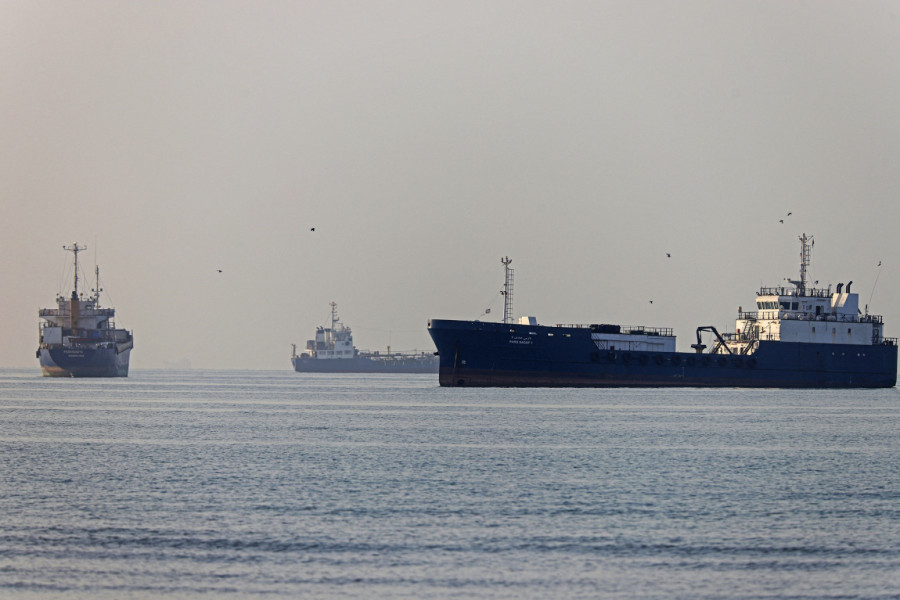
The war between the United States and Iran has escalated again after Tehran attacked at least three commercial vessels in the Strait of Hormuz on Tuesday, according to U.S. officials and sources from maritime circles.
The targets included a Saudi oil tanker and a Qatari liquefied natural gas (LNG) carrier, prompting the United States to revoke a temporary sanctions waiver that had allowed Iran to export oil.
Has the fragile ceasefire collapsed?
The move was one of the key concessions outlined in the memorandum of understanding reached last month between the United States and Iran. The agreement allowed Tehran to resume oil exports after its tankers had been halted due to a U.S. naval blockade.
The U.S. military command said on Wednesday that it had struck more than 80 targets in Iran, including air defense systems, radar positions, and more than 60 small vessels used by Iran’s Revolutionary Guard to disrupt commercial shipping.
The U.S. military said on Thursday that it had continued the operation with a new series of strikes against around 90 targets. According to the statement, the aim of the operation was to “impose a high cost for targeting and attacking commercial vessels with crews made up of innocent civilians on an international waterway.”
Iran then retaliated with new missile attacks on Gulf countries. On Wednesday, air raid sirens and explosions were reported in Bahrain and Kuwait, while further attacks were recorded on Thursday. Responding to the escalation, maritime security company MARISKS warned on Wednesday that the exchange of strikes “represents a return to direct military confrontation.”
Tanjug/AP Photo/Francisco Seco
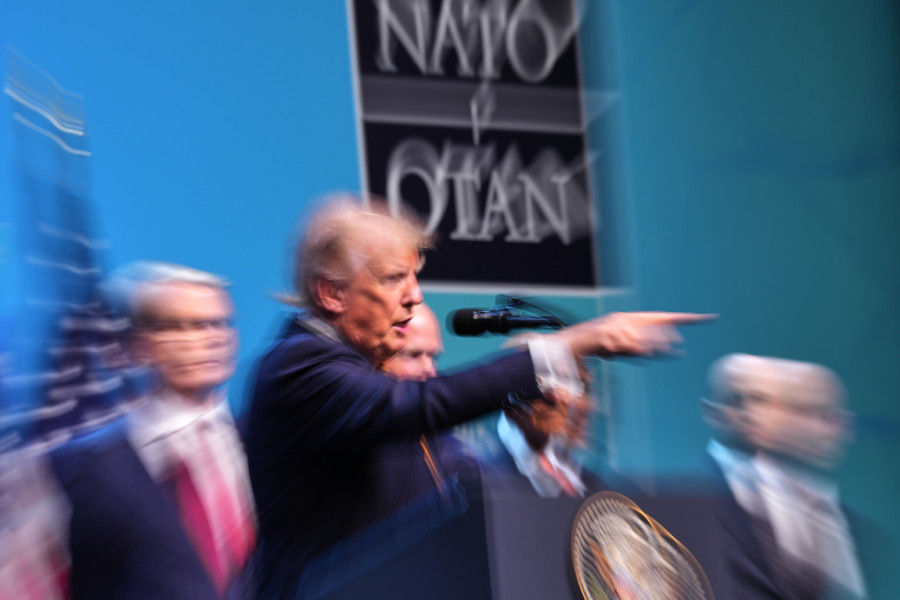
Speaking ahead of the NATO summit in Turkey, U.S. President Donald Trump said that the memorandum of understanding with Iran was now “dead.” He added that “it’s a waste of time dealing with them,” referring to Tehran.
China and Qatar, meanwhile, called for immediate de-escalation, while German Defense Minister Boris Pistorius urged Tehran to stop provoking Washington and halt attacks on ships.
Why is Iran attacking ships in the Strait of Hormuz again?
Iran is seeking to maintain control over the Strait of Hormuz, a narrow maritime passage through which, before the war, one-fifth of the world’s oil and gas exports from the Persian Gulf passed to global markets.
Iran effectively closed the strait after U.S.-Israeli airstrikes on February 28 killed several senior Iranian officials, including Supreme Leader Ali Khamenei. Following that, Iran attacked around ten commercial vessels that were passing through the strait before a ceasefire agreement was reached last month.

In the days leading up to Tuesday’s attacks, peace talks failed to make significant progress in resolving a number of outstanding issues, including long-term easing of U.S. sanctions and Iran’s nuclear program.
Iran has repeatedly used the Strait of Hormuz as a tool of pressure during negotiations whenever the diplomatic process reaches a deadlock. It has also resorted to attacks on Gulf countries such as Saudi Arabia, the United Arab Emirates, and Qatar.
In Tehran, officials view attacks on these major oil producers and key U.S. allies as a way to pressure Washington and spread instability so that the entire Middle East feels the cost of the war.
What is Iran’s real influence?
Repeated attacks have seriously weakened Iran’s military capabilities. Since Tehran cannot defeat the U.S. military in a conventional conflict, it relies on asymmetric warfare as its main means of applying pressure.
Although Iran does not have sovereignty over the Strait of Hormuz, it controls its northern coastline, several strategically important islands, and sections of the coast that allow its forces to monitor and threaten ships passing through the waterway.
Iran then relies on fast boats, coastal missile systems, underwater mines, and drones to attack tankers, disrupting global energy supplies without engaging in an open naval confrontation.
According to available reports, Iran has also begun charging a fee for safe passage through the Strait of Hormuz, with the amount reaching up to two million U.S. dollars (around 1.75 million euros) per vessel. Maritime experts say such a practice violates international law and is effectively unenforceable.
Iran insists that ships use a maritime corridor designated by Tehran that passes through its northern territorial waters, while the United States supports the use of a corridor located closest to Oman’s territorial waters.
However, Tehran’s ability to exert pressure is not unlimited. The United States responded with its own naval blockade in the Strait of Hormuz, preventing Iranian ships from exporting oil and cutting off one of the Iranian state’s most important sources of revenue.
Even under U.S. sanctions, Iran continued to export oil, primarily to China, at prices below market levels.
Tehran relies on what is known as a “shadow fleet” — tankers that frequently change their flags of registration, disable tracking systems, and use ship-to-ship transfers in order to avoid detection.
However, without a temporary sanctions waiver and with the possibility that the U.S. Navy could reimpose the blockade, the Iranian regime now risks a complete economic collapse.
According to an assessment by the Washington-based think tank Foundation for Defense of Democracies, Iran has suffered $144 billion in economic damage during the war, with additional billions lost due to declining oil revenues during the blockade.
The national currency, the rial, has fallen to an all-time low of around 1.7 million rials per U.S. dollar, while the inflation rate has exceeded 88 percent.
What happens next?
In its latest statement, maritime security analysis company MARISKS assessed that revoking Iran’s temporary exemption from U.S. sanctions “undermines the political foundations” of the peace agreement and “reduces incentives for continued restraint.”
The company warned that the “likelihood of further escalation has increased significantly.”
Although Donald Trump said that negotiations would most likely continue, he described Iran’s leadership as “sick people” and said he did not want to negotiate with that regime.
AMIRHOSSEIN KHORGOOEI / AFP / Profimedia
Bloomberg, citing an unnamed U.S. official, reported that Tehran must act responsibly if it wants to retain the benefits provided under the memorandum of understanding. The same official added that U.S. negotiators would continue talks.
Iran, however, has shown no willingness to make concessions. Parliament Speaker Mohammad Bagher Ghalibaf wrote on the social media platform X: “The time of intimidation and extortion is over. It leads nowhere. We will not back down.”
As oil prices rose by five percent due to the latest escalation, some experts warn that further U.S. airstrikes are unlikely to change Tehran’s strategy. “On the contrary, there is a danger that both sides will move even further away from a negotiated solution, which, it appears, both Washington and Tehran still prefer,” wrote Dennis Citrinowicz, an external contributor at the Atlantic Council Research Center, on X.
Sukob na Bliskom istoku – 130. dan. Vojska Sjedinjenih Američkih Država saopštila je da po nalogu američkog predsednika Donalda Trampa, započela nove napade na Iran.
Poslanici Skupštine Srbije danas će nastaviti rad raspravom po amandmanima na Predlog zakona o integrisanom sprečavanju i kontroli zagađivanja životne sredine.
Vlada Srbije trebalo bi danas da usvoji predlog Ministarstva finansije da se akcize na naftne derivate smanje za dodatnih pet odsto, tako da ukupno umanjenje akciza iznosi 10 odsto, od 13. do 19. jula, rečeno je Tanjugu u ministarstvu.
Rat u Ukrajini – 1.597. dan. Tok rata se preokrenuo. Ukrajinske snage sada zadaju snažne udarce Rusiji. Tokom noćiizveli su seriju napada na naftnu infrastrukturu, gađajući ciljeve u više regiona Rusije.
U.S. President Donald Trump said that he could present a proposal for an agreement with Iran within the next few days, adding that the negotiations are “going very well.”
According to sources familiar with negotiations, Iran’s Supreme Leader Mojtaba Khamenei instructed his negotiators to reach an agreement with the United States for the first time since the start of the conflict, leading to a two-week ceasefire.
The arrival of additional U.S. forces in the Middle East, along with President Donald Trump’s threats to “wipe out” Iran’s energy infrastructure, signals a potential escalation of the conflict.
Poslanici Skupštine Srbije danas će nastaviti rad raspravom po amandmanima na Predlog zakona o integrisanom sprečavanju i kontroli zagađivanja životne sredine.
Rat u Ukrajini – 1.597. dan. Tok rata se preokrenuo. Ukrajinske snage sada zadaju snažne udarce Rusiji. Tokom noćiizveli su seriju napada na naftnu infrastrukturu, gađajući ciljeve u više regiona Rusije.
Portal "Ko si, bre, ti", cije je pokretanje inicirao predsednik Srbije Aleksandar Vučić, zvanično je počeo sa radom, a platforma je namenjena anonimnom prijavljivanju korupcije, zloupotreba i drugih nepravilnosti od javnog interesa.
Vrhovni komandant Oružanih snaga Ukrajine Oleksandr Sirski izjavio da su ruske snage pokušale da pokrenu ofanzivu velikih razmera, ali nisu uspeli da ostvare nijedan od svojih ciljeva.
Žena iz Njujorka izazvala je burne reakcije na društvenim mrežama nakon što je otkazala prvi sastanak jer joj se nije dopao restoran koji je muškarac izabrao. Njeni visoki standardi za izlazak podelili su mišljenja korisnika.
Šveđanin Elias Verlinge pronašao je detektorom metala izgubljeni venčani prsten i vratio ga vlasnicima, ali ga je nekoliko dana kasnije policija kaznila zbog korišćenja detektora bez dozvole.
U filmu, pored Meta Dejmona, igraju i En Hatavej, Šarliz Teron, Lupita Njongo, Robert Patinson, kao i Holandova supruga Zendaja, kojoj je pripala uloga boginje Atine.
Goran Mihajlović, Assistant Director of the Republic Hydrometeorological Service of Serbia (RHMZ), said today that temperatures between 28°C and 32°C are expected through mid-July.
Israeli Defense Forces (IDF) Chief of Staff Lieutenant General Eyal Zamir said today at a pilot graduation ceremony that the military campaign against Iran "is not over" and warned that major new operations are expected.
A new fire broke out at noon in the Aspropyrgos area near Athens, Greek media reported. A total of 38 firefighters with 14 vehicles have been deployed to battle the blaze, Kathimerini reported.
Google-ov sistem SynthID iskorišćen je za razotkrivanje lažne slike generisane AI-jem, koja je privukla veliku pažnju javnosti, što predstavlja retku ali značajnu pobedu za ovaj sistem.
Komentari 0
Pogledaj komentare Pošalji komentar